
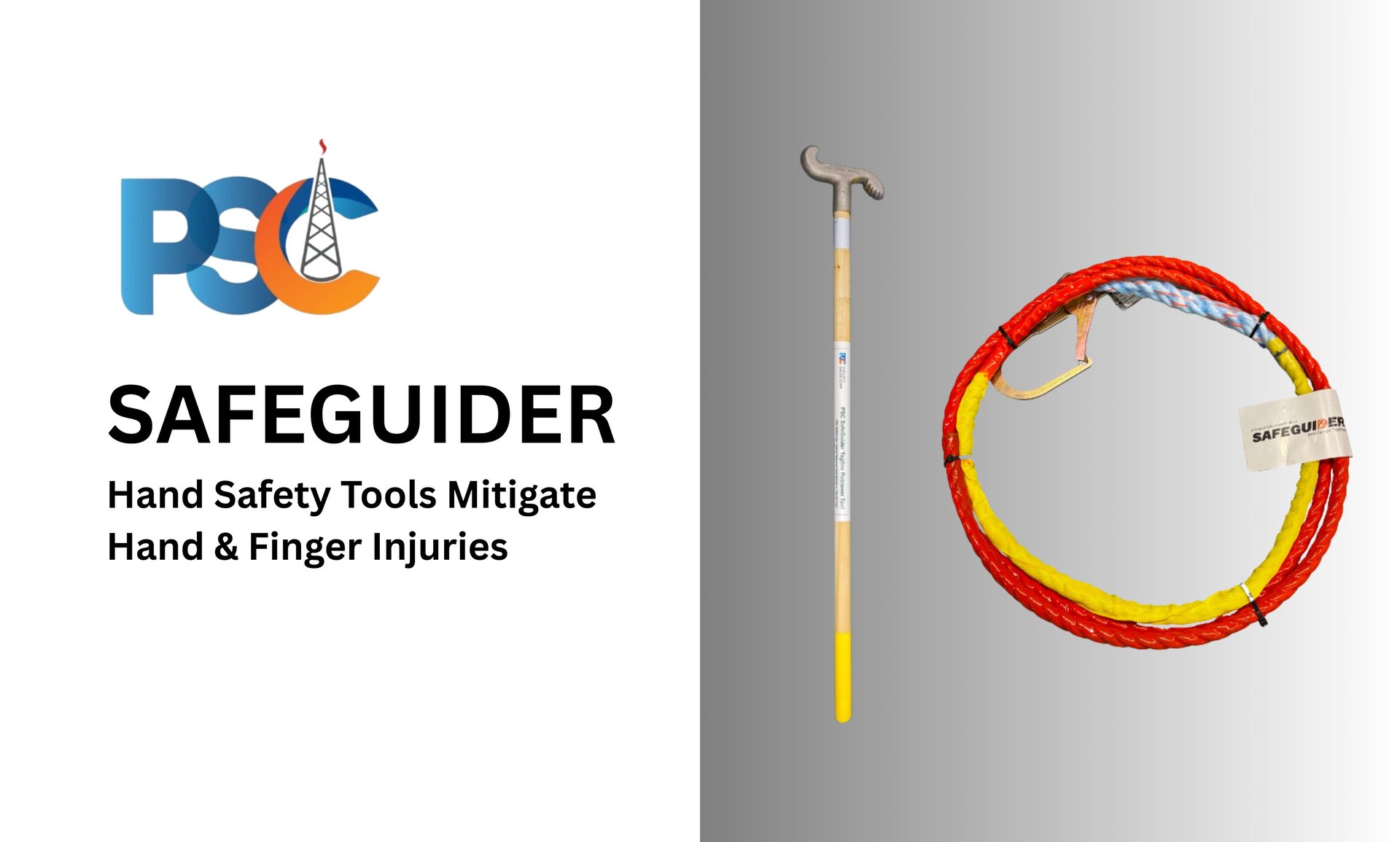
PSC SAFEGUIDER
Hand Safety Tools to Mitigate Hand And Finger Injuries
Engineered for safer suspended load handling in construction, heavy engineering, ports, and industrial lifting operations.
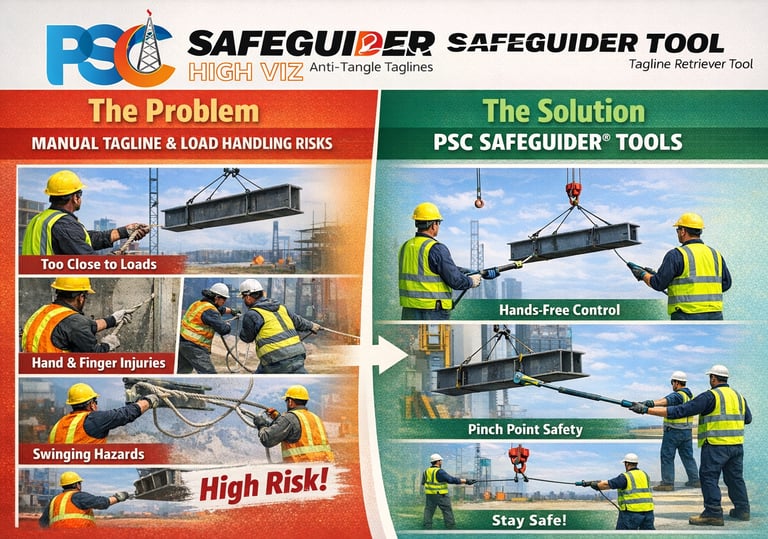
PSC Safeguider® tools eliminate direct hand contact with suspended loads, significantly reducing pinch-point injuries, uncontrolled taglines, and manual load handling risks. The Problem: Manual Tagline & Load Handling Risks
In lifting operationThe PSC Safeguider Solutions, suspended loads are guided manually using ropes or taglines. Workers often:
Stand too close to moving loads
Hold taglines directly near pinch zones
Get exposed to swinging or rotating loads
Experience hand, finger, and crush injuries
Face sudden tagline entanglement during wind or crane movement
Uncontrolled taglines can:
Tangle with structures
Snap under tension
Whip unexpectedly
Create unstable load movement
Increase HSE violations
Industrial lifting environments demand distance, control, and precision — not direct hand exposure.
The PSC Safeguider Solution
A Complete Suspended Load Control & Hand Injury Prevention System
In lifting and rigging operations—whether on construction sites, oil & gas rigs, fabrication yards, ports, or heavy engineering facilities—the most common injuries do not occur from equipment failure. They occur during manual load control.
Workers instinctively use their hands to guide, steady, untwist, or retrieve taglines attached to suspended loads. This places them directly in the red zone—the high-risk area between moving loads, fixed structures, and shifting equipment.
The PSC Safeguider Solution was engineered to eliminate that exposure.
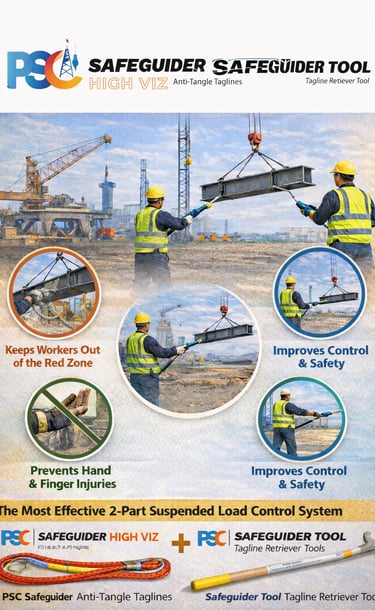
It is not just a tool. It is a two-part integrated suspended load control system designed to reduce hand, finger, and crush injuries while improving operational control.
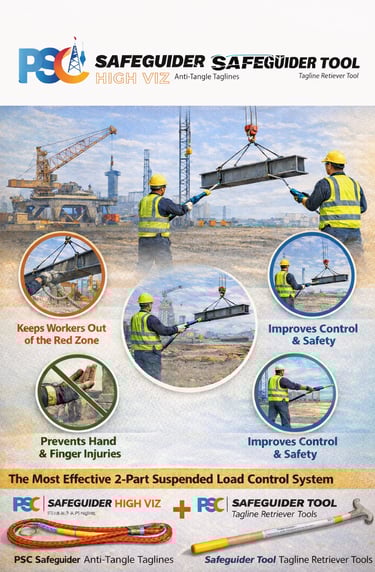
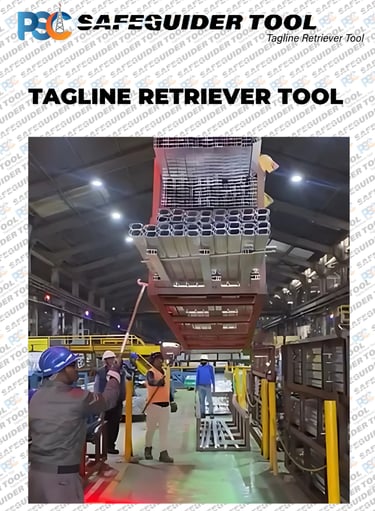
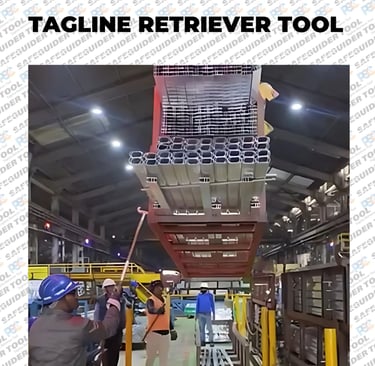
PSC Safeguider Tagline Retriever Tool
Purpose-Built for Safer Tagline Handling in Industrial Lifting Operations
In lifting and rigging operations, suspended loads introduce unpredictable movement due to gravity, inertia, wind forces, and crane motion. Traditionally, workers manually hold and guide taglines to control load swing and rotation. However, direct tagline gripping exposes hands and fingers to pinch points, sudden tension forces, and uncontrolled load shifts.
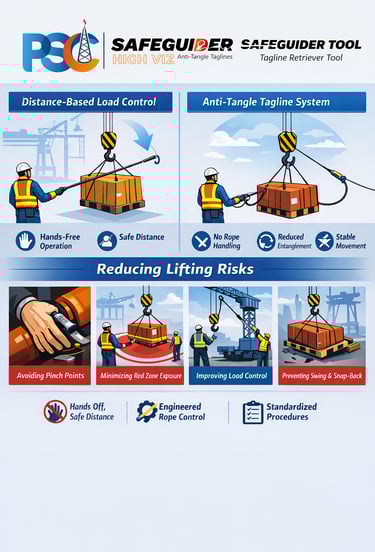
The PSC Safeguider Tagline Retriever Tool is engineered to eliminate that exposure. It transforms tagline handling from a manual, high-risk activity into a controlled, distance-based operation. Instead of gripping rope directly, operators manage the tagline through a structured tool interface — maintaining control without compromising safety.
Core Function – Redefining Tagline Control
Maintains Safe Operator Distance
The Safeguider creates a physical barrier between the operator and the suspended load. By extending reach, it ensures workers remain outside red-zone areas where loads can shift or rotate suddenly. This controlled distance significantly reduces injury probability during:
Crane lifts
Structural steel erection
Equipment installation
Pipe and vessel handling
Distance is not just comfort — it is engineered risk reduction.
Eliminates Hand Proximity to Pinch Points
Pinch points occur when a load rotates, lands, or shifts direction unexpectedly. Manual tagline handling places fingers directly in tension zones.
The Safeguider removes direct rope contact and:
Prevents rope burn injuries
Avoids sudden hand entrapment
Eliminates crush exposure between load and structure
Reduces risk of glove entanglement
This directly supports “hands-off” lifting safety philosophy.
Improves Precision During Load Positioning
Suspended loads require controlled micro-adjustments for accurate placement. Traditional rope-only guidance often leads to:
Overcorrection
Excessive swing
Delayed response to load rotation
The Safeguider’s rigid structure enhances directional control, enabling smoother, more predictable positioning. Operators can apply controlled force without instability or rope flex delay.
Enhances Stability in Windy Conditions
Wind introduces lateral load forces that amplify swing and rotation. A rope alone provides limited leverage and delayed response.
The structured design of the Safeguider:
Improves leverage
Stabilizes sudden directional shifts
Reduces oscillation
Helps counteract wind-induced movement
This is critical in offshore platforms, high-rise construction, and open industrial yards.
Key Features – Engineered for Industrial Reliability
Extended Reach Design
The extended configuration allows workers to guide loads while remaining outside crush zones and load impact paths. This design:
Complies with red-zone safety practices
Reduces operator stress
Enhances lift confidence
Maintaining distance is one of the most effective injury prevention strategies in lifting operations.
Structured Rigid Frame
Unlike soft rope control, the rigid frame provides:
Enhanced mechanical advantage
Improved load responsiveness
Greater directional stability
This structured support converts passive tagline holding into active, controlled guidance.
Controlled Tagline Interface
The interface is specifically engineered to manage tagline tension securely without manual gripping. It ensures:
Secure tagline engagement
Reduced slippage
Controlled tension transfer
Improved ergonomic handling
This minimizes hand strain and repetitive stress injuries during frequent lifts.
Improved Load Positioning Accuracy
Precision is essential when installing:
Structural beams
Heavy machinery
Pipes and spools
Electrical panels
Skid-mounted equipment
The Safeguider enables fine adjustments with better directional feedback, reducing rework and lift delays.
Industrial-Grade Construction
Built for harsh jobsite environments, the Safeguider features:
Durable structural materials
Corrosion-resistant properties
High load endurance
Long service life
It is engineered for demanding industries including oil & gas, construction, shipyards, fabrication yards, and heavy manufacturing plants.
Safety Advantages – Operational and Compliance Benefits
Minimizes Hand Exposure to Suspended Loads
By eliminating direct rope gripping, the tool reduces direct interaction with dynamic loads — a primary cause of lifting-related injuries.
Reduces Crush and Pinch Injuries
Most lifting injuries involve fingers caught between:
Load and structure
Load and ground surface
Rope and load contact areas
The Safeguider drastically lowers that exposure.
Improves HSE Compliance
Modern safety standards emphasize:
Hands-off load control
Red-zone elimination
Standardized lifting practices
Hierarchy of hazard control
The Safeguider supports compliance with global HSE frameworks by introducing engineering control rather than relying solely on procedural control.
Encourages Standardized Lifting Procedures
Using a dedicated tool creates consistency in how loads are handled. This leads to:
Predictable operator behavior
Reduced unsafe improvisation
Improved lifting supervision
Better training outcomes
Standardization reduces variability — and variability causes accidents.
Enhances Operator Confidence and Control
Psychological safety is as important as physical safety. When operators feel in control:
Decision-making improves
Panic reactions decrease
Situational awareness increases
Productivity improves
The Safeguider strengthens both physical and mental control during lifting operations.
Broader Industrial Impact
The PSC Safeguider Tagline Retriever Tool is more than a lifting accessory — it represents a shift toward proactive injury prevention in material handling. Instead of accepting manual tagline risk as standard practice, it introduces an engineered safety solution that aligns with modern industrial risk management principles.
It supports:
Safer crane operations
Reduced lost-time injuries
Lower insurance and downtime costs
Higher operational reliability
Stronger safety culture
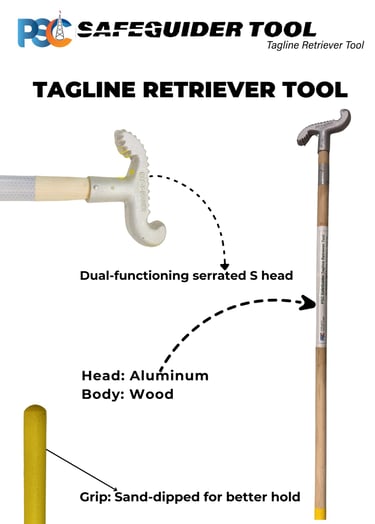
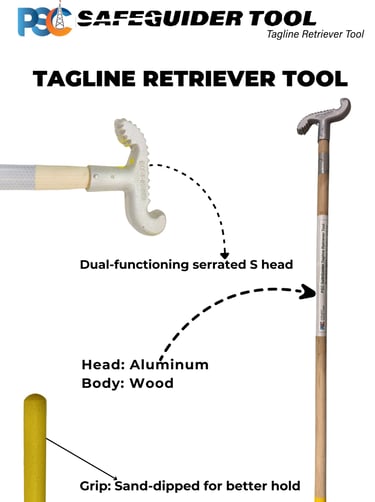


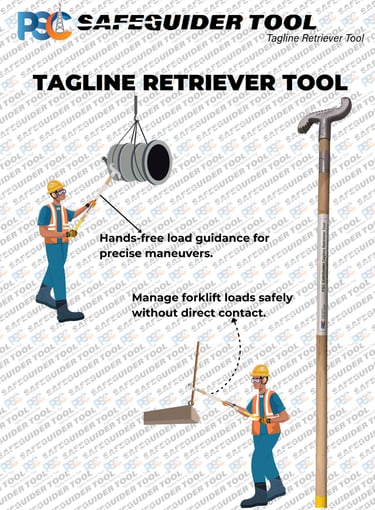

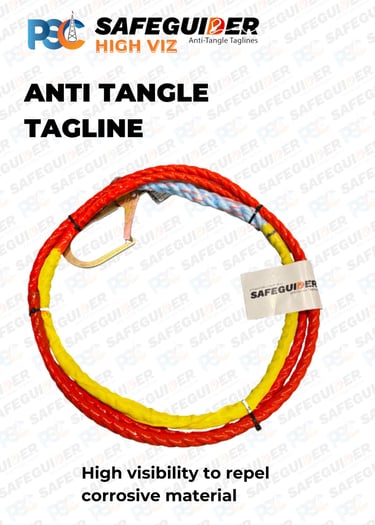
PSC Safeguider Anti-Tangle Taglines
Engineered Rope Control for Safer Lifting Operations
In lifting operations across construction sites, heavy engineering yards, ports, shipyards, and industrial plants, taglines are critical for controlling suspended loads. However, conventional ropes often introduce more risk than control. Twisting, knotting, uncontrolled slack, and rope memory can destabilize loads, create unpredictable movement, and expose workers to serious hand, finger, and crush injuries.
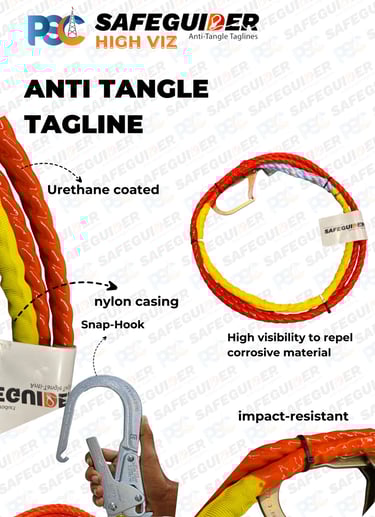
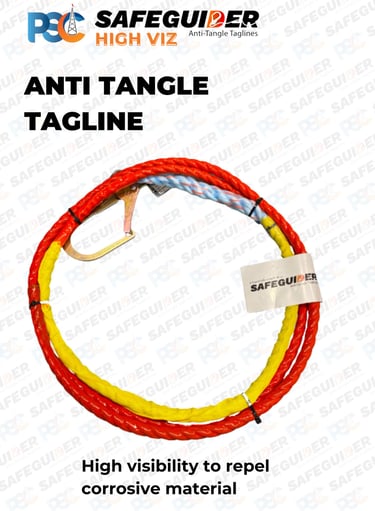
PSC Safeguider Anti-Tangle Taglines are purpose-built to solve these operational challenges. They are not just ropes — they are engineered control components designed to enhance stability, predictability, and safety during suspended load handling.
The Operational Problem with Traditional Taglines
Standard taglines typically suffer from:
Rope memory causing coil retention
Uncontrolled twisting under crane rotation
Tangling around structures or rigging components
Sudden snap-back under tension
Excessive slack leading to unstable load positioning
These issues contribute to:
Load swing amplification
Loss of balance during positioning
Increased operator fatigue
Hand proximity to pinch points
Higher risk of entanglement injuries
HSE non-compliance in regulated environments
Industrial lifting environments demand controlled tension, predictable rope behavior, and consistent load guidance — not reactive rope handling.
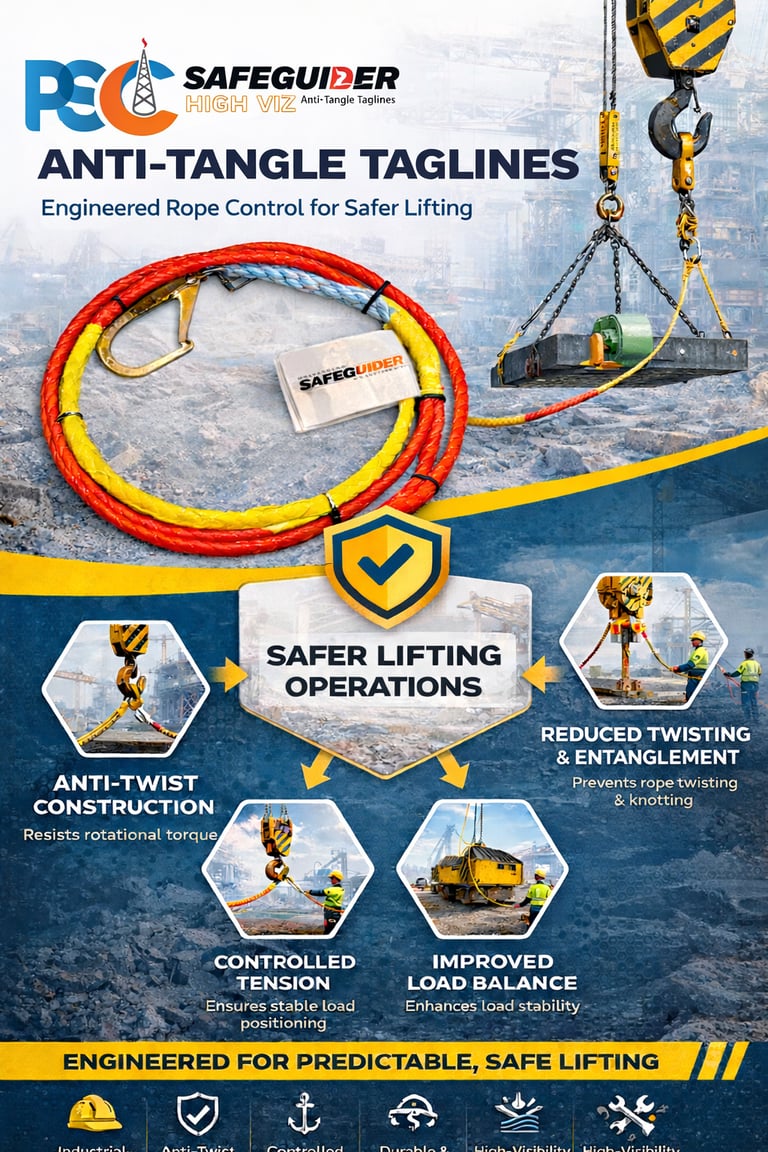
How PSC Safeguider Anti-Tangle Taglines Improve Safety & Control
Anti-Twist Construction
The tagline is engineered to resist rotational torque generated by crane hooks and suspended loads.
Impact:
Minimizes rope spin during load rotation
Reduces buildup of torsional stress
Prevents rope kinking and structural weakening
Improves load predictability
By controlling rotational behavior, the system reduces unexpected load swing and instability.
Reduced Rope Twisting & Entanglement
Unlike conventional ropes that coil and knot under dynamic conditions, PSC Anti-Tangle Taglines maintain structural alignment.
Operational Advantages:
Lower risk of knot formation
Reduced snagging on structural steel
Smoother load tracking
Less manual intervention required
This directly decreases the need for workers to approach suspended loads to “untangle” ropes — a common injury trigger.
Maintained Controlled Tension
Proper tension control is critical in guiding suspended loads safely. Excess slack leads to instability; excessive tension can create snap-back hazards.
PSC Anti-Tangle Taglines are engineered for:
Balanced flexibility
Controlled elasticity
Consistent response under varying load conditions
This ensures:
Stable load movement
Reduced oscillation
Improved operator control
Improved Load Balance
When a tagline behaves predictably, the load behaves predictably.
The structured rope design helps:
Stabilize lateral movement
Control rotational drift
Maintain better alignment during landing and positioning
Improve precision in tight industrial spaces
This is especially important in:
Port container handling
Heavy fabrication yards
Offshore modules
Confined industrial lifting zones
Key Engineering Features
✔ Anti-Twist Rope Construction
Designed to resist rotational torque and maintain directional integrity under dynamic lifting conditions.
✔ High-Visibility Design
Bright, industrial-grade coloration improves:
Operator awareness
Crane operator visibility
Night-shift recognition
Compliance with site safety standards
Visibility reduces accidental entanglement and improves team coordination.
✔ Durable Industrial-Grade Material
Built for harsh environments including:
Abrasive construction sites
Marine and port operations
Offshore environments
Heavy engineering plants
The material resists:
Abrasion
Moisture exposure
UV degradation
Mechanical wear
This extends operational life while maintaining performance integrity.
✔ Controlled Flexibility
The tagline provides:
Enough flexibility for maneuverability
Enough stiffness for controlled guidance
Reduced rope memory
Minimal slack buildup
This balance is essential for safe suspended load positioning without sudden rope behavior.
Integrated Safety System: Compatibility with PSC Safeguider Tagline Retriever Tool
PSC Anti-Tangle Taglines are engineered to work seamlessly with the PSC Safeguider Tagline Retriever Tool, forming a complete suspended load control system.
When combined:
Operators maintain safe working distance
Direct hand contact with loads is eliminated
Rope behavior remains stable and predictable
Pinch-point exposure is minimized
Overall load handling precision improves
This integration transforms traditional manual tagline handling into a controlled, distance-based safety system.
Broader Safety & HSE Impact
By improving rope behavior and eliminating unpredictable movement, PSC Safeguider Anti-Tangle Taglines help organizations:
Reduce hand and finger injuries
Lower lost-time incidents
Improve lifting operation stability
Enhance red-zone safety compliance
Support proactive risk mitigation strategies
Instead of reacting to rope behavior, crews operate with engineered control.



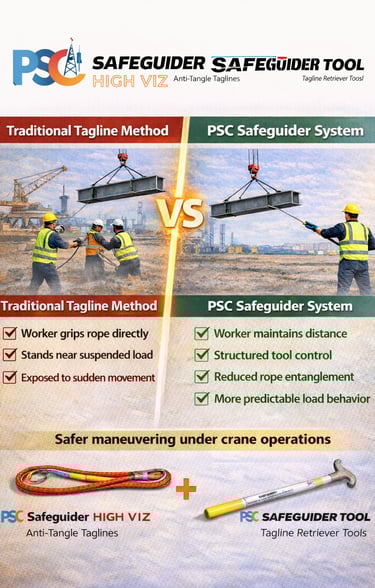
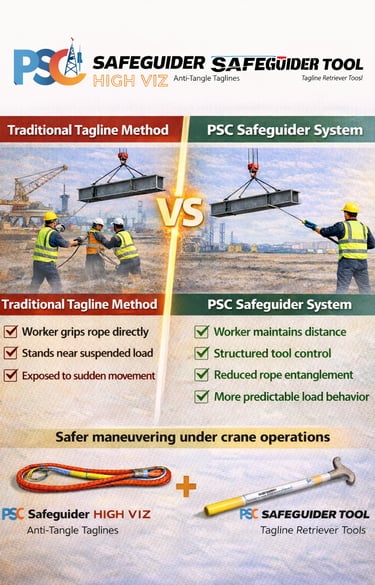
Why PSC Safeguider System is Different
Traditional tagline method:
Worker grips rope directly
Stands near suspended load
Exposed to sudden movement
PSC Safeguider system:
Worker maintains distance
Structured tool control
Reduced rope entanglement
More predictable load behavior
Safer maneuvering under crane operations
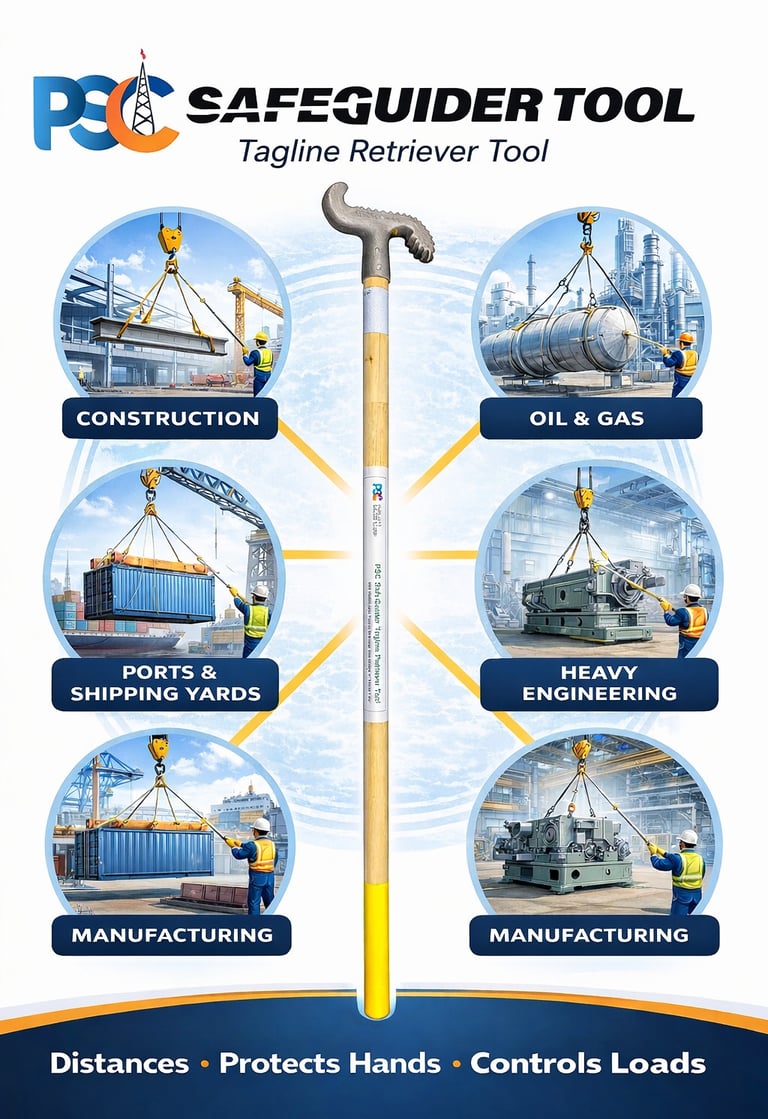
Applications of PSC Safeguider® Tools
PSC Safeguider® tools are engineered for controlled suspended load handling, specifically in environments where workers are exposed to pinch points, crush zones, and unpredictable load movement. These tools are not lifting devices — they are distance-maintaining load control systems designed to eliminate direct hand contact with suspended loads.
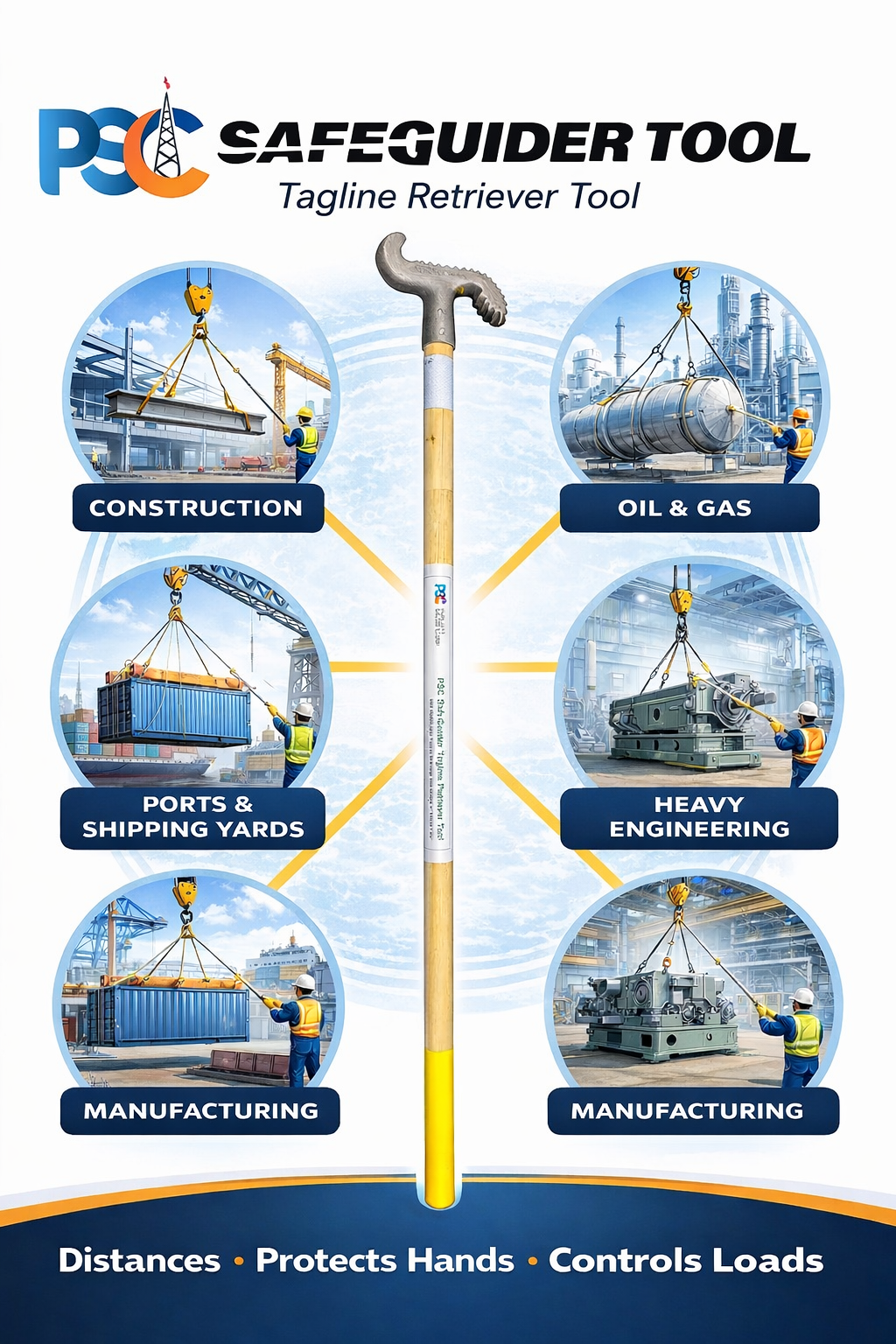
Construction Sites
(Steel Erection, Beam Placement, Structural Assembly)
Operational Environment:
Construction lifting environments are dynamic. Steel beams, columns, precast panels, and structural assemblies are often maneuvered in confined spaces with workers positioned near connection points.
Risk Factors:
Workers standing beneath or adjacent to suspended steel
Direct manual tagline handling
Sudden beam rotation due to wind
Pinch zones between structural members
Load swing during crane movement
Role of PSC Safeguider®:
Allows operators to guide beams from a safe distance
Reduces hand proximity to connection joints
Improves precision alignment during bolting operations
Minimizes uncontrolled rotation
Enhances crane communication and controlled movement
Result: Reduced hand injuries, improved structural placement accuracy, and safer erection workflows.
Oil & Gas Projects
(Module Lifting, Equipment Installation, Skid Positioning)
Operational Environment:
Oil & gas facilities involve heavy module lifts, pressure vessels, pumps, compressors, and skid-mounted equipment. These lifts often occur in congested areas with pipe racks and live systems.
Risk Factors:
Tight installation clearances
Equipment swinging during final positioning
Workers manually stabilizing loads
High-risk “red zones” during load landing
Role of PSC Safeguider®:
Enables controlled final alignment of modules
Prevents personnel from entering crush zones
Reduces need for hand-based stabilization
Provides structured mechanical guidance
Result: Safer equipment installation, improved load predictability, and reduced lost-time incidents (LTIs).
Ports & Shipping Yards
(Container and Cargo Positioning)
Operational Environment:
Port operations deal with suspended containers, heavy cargo, steel coils, fabricated structures, and offshore components.
Risk Factors:
High wind exposure
Rapid crane cycles
Twisting taglines
Workers gripping ropes near moving containers
Role of PSC Safeguider®:
Maintains operator distance from suspended containers
Controls rotation during container placement
Improves maneuvering in windy conditions
Reduces entanglement during rapid operations
Result: Enhanced dockside safety, reduced rope snap-back risks, and improved cargo placement efficiency.
Heavy Engineering Plants
(Machinery Relocation & Installation)
Operational Environment:
Large motors, turbines, CNC machines, presses, and heavy fabrication equipment are often relocated inside confined industrial spaces.
Risk Factors:
Tight floor clearances
Swinging loads during internal transport
Hand contact during final positioning
Equipment edge pinch hazards
Role of PSC Safeguider®:
Allows safe load guiding inside facilities
Prevents hands entering pinch zones
Improves controlled landing of machinery
Reduces dependency on manual push-pull contact
Result: Controlled installation, minimized downtime, and enhanced worker protection.
Manufacturing Units
(Load Positioning During Fabrication Processes)
Operational Environment:
Fabrication yards handle pipes, frames, assemblies, and sub-structures that require precise positioning for welding, assembly, or machining.
Risk Factors:
Workers steadying parts manually
Sudden load shifts during crane lowering
Entangled taglines
Unpredictable rope behavior
Role of PSC Safeguider®:
Structured tool-based load control
Maintains tension without direct rope grip
Reduces finger injuries during alignment
Improves repeatability in production workflows
Result: Increased fabrication safety and improved operational precision.
Applications of PSC Anti-Tangle Tagline System
The PSC Anti-Tangle Tagline is engineered to solve one of the most overlooked hazards in lifting operations: uncontrolled rope behavior.
Traditional taglines:
Twist under load rotation
Knot during lifting cycles
Whip when tension changes
Create unstable load behavior
The PSC Anti-Tangle Tagline system is specifically used in environments where load rotation, wind, and repeated crane cycles create instability.
Where PSC Anti-Tangle Taglines Are Used
High-Rise Construction
When lifting steel beams or facade panels at height:
Wind causes rope twisting
Long tagline lengths amplify rotation
Sudden tension changes cause whip-back
Anti-Tangle Advantage:
Reduces rope twist accumulation
Maintains controlled tension
Improves predictable load behavior
Offshore & Marine Operations
In offshore installations:
Constant wind exposure
Vessel movement
Rotational crane lifts
Traditional ropes can:
Coil unpredictably
Snap under sudden tension shifts
Entangle around structural elements
PSC Anti-Tangle System:
Maintains rotational stability
Reduces knotting
Improves controlled landing of equipment
Ports & Container Yards
Repeated container lifts create rope fatigue and twisting.
Anti-Tangle Benefits:
Faster lift cycles
Reduced downtime from rope replacement
Lower risk of snap-back incidents
Heavy Fabrication Yards
Frequent rotation of cylindrical components (pipes, tanks, drums) causes traditional taglines to wrap around themselves.
PSC Anti-Tangle Tagline:
Designed to resist rotational build-up
Maintains alignment stability
Reduces entrapment hazards
Oilfield & Modular Construction Projects
Module lifts often involve:
Complex rigging angles
Multi-point lifting
Rotational shifts
Anti-tangle construction ensures:
Controlled rope behavior
Reduced manual intervention
Improved integration with Safeguider Retriever Tool
Integrated System Application
The true operational advantage appears when:
PSC Safeguider Tool
+
PSC Anti-Tangle Tagline
are used together as a complete suspended load control system.
Combined Benefits:
Hands-free guidance
Distance-based control
Reduced rope instability
Predictable load rotation
Lower HSE violations
Enhanced operational efficiency
Engineering & Safety Impact
From a reliability and HSE standpoint, these systems:
Shift lifting operations from reactive correction to controlled guidance
Reduce hand and finger injury rates
Improve crane operator coordination
Lower lost-time incidents
Increase compliance with global lifting safety standards
Designed for Industrial Safety Compliance
PSC Safeguider® Tool & Anti-Tangle Tagline System
Modern lifting environments demand more than operational efficiency — they require structured safety compliance. The PSC Safeguider® tool and Anti-Tangle Tagline system are engineered to align with industrial safety regulations, global HSE expectations, and best-practice suspended load handling protocols.
They are not lifting devices. They are risk-control systems designed to reduce human exposure to moving loads and improve procedural compliance across industrial worksites.
Alignment with Best HSE Lifting Practices
Across construction, oil & gas, ports, fabrication yards, and heavy engineering facilities, HSE frameworks emphasize:
Eliminating or reducing direct worker exposure to hazards
Maintaining safe distances from suspended loads
Avoiding manual intervention in pinch and crush zones
Implementing engineered controls over behavioral controls
The PSC Safeguider® system directly supports these objectives by:
Allowing workers to guide loads from a safe distance
Eliminating hand-to-load and hand-to-tagline contact
Reducing uncontrolled load movement
Supporting structured, repeatable lifting procedures
This shifts the operation from manual reactive handling to controlled engineered guidance.
Controlled Suspended Load Handling Protocols
Uncontrolled taglines and manual load correction are major contributors to:
Hand and finger injuries
Crush zone exposure
Unpredictable load swing
Sudden rotation under crane movement
Rope snap-back incidents
The Anti-Tangle Tagline component ensures:
Reduced rope memory and twist retention
Controlled tension during crane rotation
Minimized entanglement with structures
Improved predictability of load behavior
When integrated with the Safeguider® tool, the system creates a structured method of:
Distance-based load steering
Controlled rotational correction
Stable load positioning during final placement
This improves compliance with internal lifting plans and method statements.
Reduced Manual Handling Exposure
Manual tagline handling is a high-risk activity because workers:
Grip ropes under tension
Stand near suspended loads
Enter red zones during alignment
React instinctively to shifting loads
The PSC Safeguider® system reduces manual exposure by:
Removing the need to physically grip the tagline
Increasing the operator’s distance from the load
Preventing hands from entering pinch points
Reducing sudden tension shock transmitted to the operator
This aligns with occupational safety principles that prioritize hazard elimination and engineering controls over PPE reliance alone.
Improved Site Safety Audits & Compliance Metrics
From a compliance and audit perspective, lifting operations are closely monitored for:
Red zone violations
Unsafe manual handling practices
Tagline misuse
Worker proximity to suspended loads
Near-miss incidents involving load swing
The PSC Safeguider® system helps demonstrate:
Proactive risk mitigation
Structured safe operating procedures
Reduced reliance on worker reflexes
Standardized load control methods
This can contribute to:
Improved HSE audit scores
Reduced recordable injury rates
Lower near-miss frequency
Stronger safety culture perception
It transforms suspended load control into a system-driven process rather than an individual-dependent action.
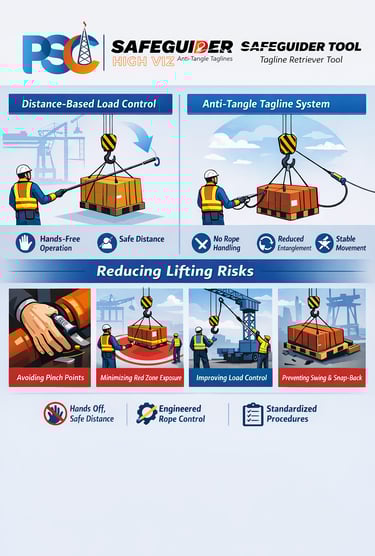
The System Promotes Distance-Based Load Control
Traditional tagline use often keeps workers within the hazard envelope.
The PSC Safeguider® approach introduces:
Physical separation between operator and load
Mechanical extension for guided positioning
Improved spatial awareness during crane movement
Distance-based control significantly reduces:
Crush injuries
Pinch-point incidents
Hand entrapment
Instinctive load grabbing
Reduced Direct Contact Handling
Direct contact during lifting operations creates multiple risk vectors:
Rope burns
Finger entanglement
Unexpected tension transfer
Loss of balance during load shift
By removing direct rope handling:
Worker reaction risk is reduced
Sudden force transmission is minimized
Controlled movement replaces reactive movement
This supports international best practices in industrial lifting safety.
Standardized Safe Operating Procedures (SOPs)
One of the biggest challenges in lifting safety is inconsistency. Different workers handle taglines differently, leading to variable risk exposure.
The PSC Safeguider® system enables:
Repeatable load control methods
Clear operational roles
Defined control positions
Structured load guidance technique
This supports:
Training standardization
Tool-based competency programs
Improved lifting plan adherence
Reduced deviation from method statements
Overall Safety Impact
By combining engineered rope control (Anti-Tangle Tagline) with distance-guided handling (Safeguider® Tool), the system:
Reduces hand and finger injuries
Minimizes red zone exposure
Improves load predictability
Enhances crane-to-ground coordination
Supports compliance with industrial safety regulations
It represents a shift from:
“Managing lifting risk” → to → “Engineering lifting risk reduction.”
Technical Overview
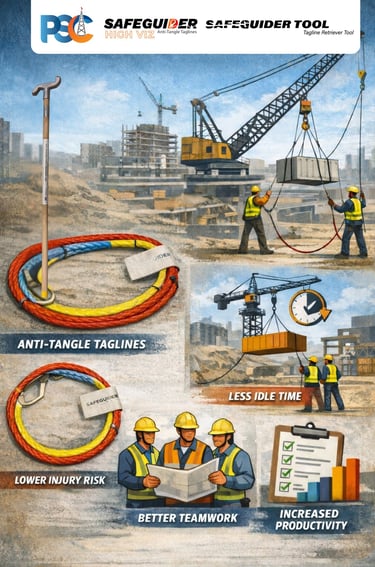
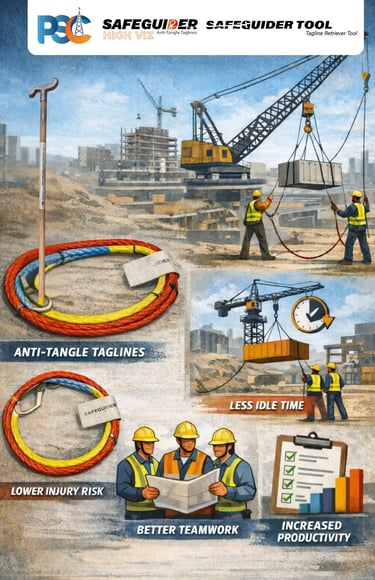
Safeguider Tagline Retriver Tool
Rigid structural build
Designed for suspended load guiding
Industrial-grade materials
Safeguider Anti-Tangle Taglines
Engineered rope construction
Twist-resistant design
High tensile strength
Weather-resistant
Operational Benefits
Faster load positioning
Reduced crane idle time
Lower injury risk
Improved team coordination
Increased productivity
Better compliance documentation


Frequently Asked Questions (FAQ)
What is a tagline tool?
A tagline tool allows operators to control suspended loads without directly holding the rope or standing close to the load.
Why are anti-tangle taglines important?
They prevent twisting and entanglement that can destabilize suspended loads and create unsafe conditions.
Can the Safeguider Tagline Retriver Tool be used in high-wind conditions?
Yes, the structured design improves control during windy environments.
Is this suitable for heavy industrial lifting?
Yes, PSC Safeguider® tools are designed for construction, ports, oil & gas, and heavy engineering sectors.
Does it replace traditional taglines?
It improves safety and control compared to manual rope-only methods.
Why Choose PSC (Project Sales Corp)
PSC is committed to:
Industrial safety innovation
Practical field-tested design
High-performance lifting accessories
Compliance-driven solutions
Worker injury reduction
Our Safeguider® product line reflects our mission:
Hands safer. Loads controlled. Operations smarter.
Stop Hand Injuries Before They Happen.
Speak with our safety specialists today.
📞 +91 9100932334
📧 info@projectsalescorp.com
🌐 safeguardtagline.com
Phone
+91 9100932334
Contact
Reach out for quotes or product info

website